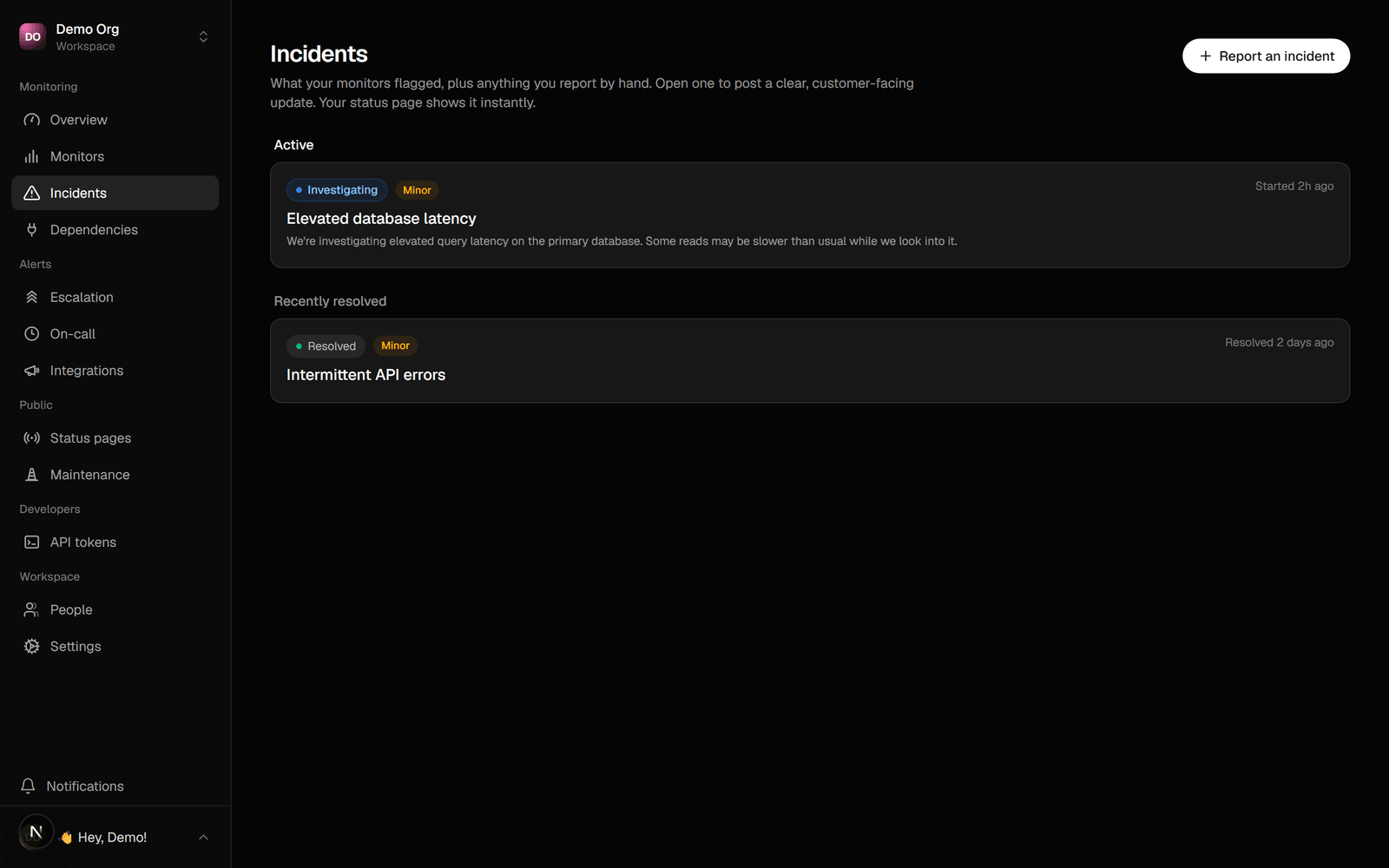
Open, update, and resolve incidents your customers can follow.
An incident is the unit of “something is wrong”. A monitor opens one automatically
when it fails past its threshold; you can also open one by hand for an issue a
check can’t see. Either way it shows on the status page and drives escalation.
Keep customers informed as you work. Each update has a status: investigating,
identified, monitoring, or resolved. Subscribers and the page’s feed get every
update. Resolving the incident clears it from the page’s active list and returns
the component to operational.
The update composer has a Draft with AI option (when an API key is
configured). It proposes a clear, on-voice update from the incident’s context. It
never posts on its own: you review and edit first, and the “AI-drafted” badge
clears the moment you change the text or the status. The same honest-copy rules as
the rest of Sentivel apply, so it states what’s known and promises nothing it
can’t keep.
After an incident resolves, write a blameless postmortem on it: what happened, the
impact, and what you’re changing. It’s part of the incident’s record and can show
on the public history.